



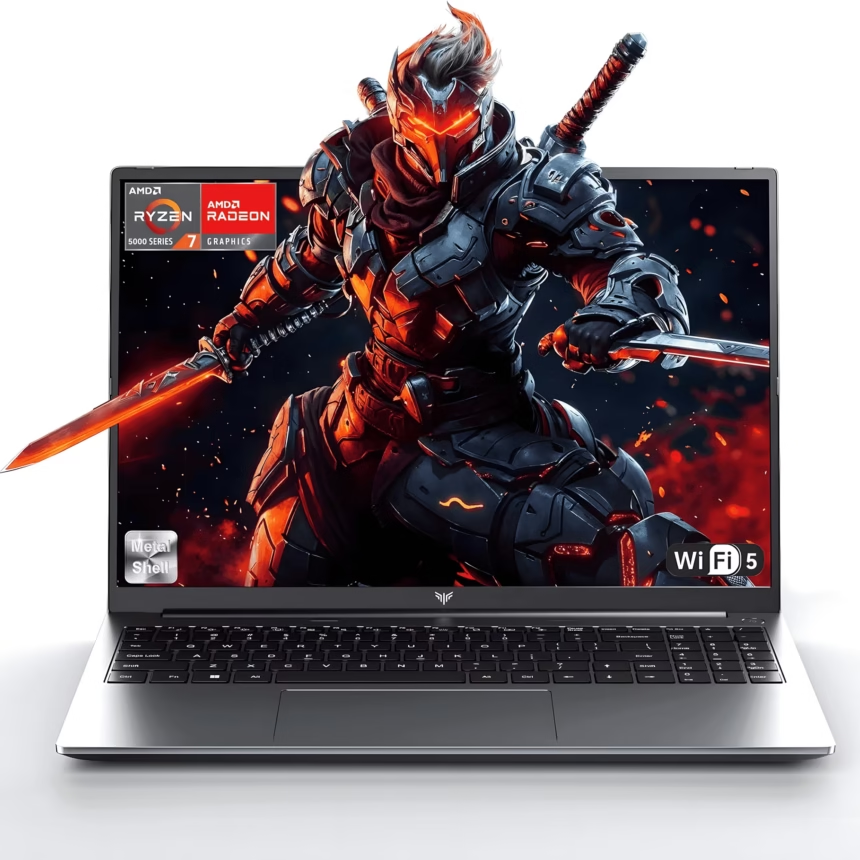
Introduction to the AMD Ryzen 7 5825U processor
The world of gaming is constantly evolving, with processors playing a crucial role in delivering seamless experiences. Among the latest contenders in this arena is the AMD Ryzen 7 5825U. With its impressive specifications and advanced features, it’s worth exploring whether this processor can hold its own against demanding games.
- Introduction to the AMD Ryzen 7 5825U processor
- Specifications and Features of the Processor
- Performance and Benchmark Tests for Gaming
- Advantages of Using the AMD Ryzen 7 5825U for Gaming
- Disadvantages of Using the AMD Ryzen 7 5825U for Gaming
- Alternatives to Consider for Gaming
- Conclusion: Is the AMD Ryzen 7 5825U Suitable for Gaming?
Imagine diving into your favorite virtual worlds without lag or hiccups. That’s what gamers dream of, and the Ryzen 7 5825U promises just that. But how does it actually perform? Let’s take a closer look at what makes this chip tick and see if it truly stands up to scrutiny when it comes to gaming prowess.
Specifications and Features of the Processor
The AMD Ryzen 7 5825U is a powerhouse designed for mobile computing. With eight cores and 16 threads, it delivers impressive multitasking capabilities.
Clock speeds reach up to 4.5 GHz, ensuring smooth performance during demanding tasks. This makes it suitable not just for productivity but also gaming scenarios when paired with the right graphics solution.
Built on the Zen 3 architecture, this processor enhances efficiency while maximizing power usage. The integrated Radeon Graphics offers decent visuals without needing a dedicated GPU.
Additionally, support for DDR4 RAM allows users to enjoy faster data transfer rates. Combined with PCIe 4.0 compatibility, it’s future-proofed for high-bandwidth applications and storage solutions.
Thermal design power (TDP) of just 15 watts ensures that devices remain cool and quiet even under load—perfect for laptop gamers who prioritize portability without sacrificing performance.
Performance and Benchmark Tests for Gaming
When evaluating the AMD Ryzen 7 5825U for gaming, performance and benchmark tests reveal impressive capabilities. This processor features a combination of high clock speeds and multi-core efficiency that enhances gaming experiences.
In various benchmarks, the Ryzen 7 5825U showcases solid frame rates across popular titles. Games like Fortnite and Apex Legends run smoothly at medium to high settings without significant lag.
Additionally, its integrated Radeon graphics provide decent performance for casual gamers who may not invest in dedicated GPUs. While more demanding games can challenge it, optimizing settings often yields playable results.
Thermal management is commendable too. The Ryzen 7 maintains stable temperatures during extended sessions, ensuring consistent gameplay without overheating issues.
Real-world performance varies based on game optimization and system configuration but remains competitive within its class.
Advantages of Using the AMD Ryzen 7 5825U for Gaming
The AMD Ryzen 7 5825U offers impressive multi-core performance. This makes it a strong choice for gaming, especially when paired with capable graphics.
Its architecture supports high clock speeds, ensuring smooth gameplay even in demanding titles. With eight cores and sixteen threads, multitasking is seamless. You can game while streaming or running other applications without hiccups.
Another key advantage is power efficiency. The Ryzen 7 5825U balances performance with energy consumption well. It’s ideal for laptops, providing long battery life during extended gaming sessions.
Additionally, the integrated Radeon graphics deliver decent frame rates for light to moderate gaming scenarios without needing a dedicated GPU. This flexibility allows casual gamers to enjoy their favorite titles without breaking the bank on additional hardware.
Support for cutting-edge technologies like PCIe 4.0 ensures future-proofing as games continue to evolve and demand more from hardware components.
Disadvantages of Using the AMD Ryzen 7 5825U for Gaming
While the AMD Ryzen 7 5825U offers solid performance, it has its drawbacks for gaming enthusiasts. One significant issue is its integrated graphics capability. Unlike dedicated GPUs, which excel in rendering high-quality visuals and maintaining frame rates, the integrated Radeon graphics may struggle with more demanding titles.
Thermal management can also be a concern. When pushed to its limits during intense gaming sessions, the processor may throttle down to manage heat levels. This results in reduced performance and potentially less enjoyable gameplay.
Additionally, battery life could suffer during extensive gaming periods on laptops featuring this chip. Gamers seeking prolonged playtime away from outlets might find themselves needing frequent recharges.
There are limited upgrade options when using a laptop equipped with this CPU compared to desktop setups where components can easily be swapped or enhanced over time.
Alternatives to Consider for Gaming
When exploring gaming options beyond the AMD Ryzen 7 5825U, several alternatives stand out.
The Intel Core i7-1165G7 is a robust competitor. It offers excellent integrated graphics performance and strong single-threaded capabilities, making it ideal for many gaming scenarios.
Another noteworthy option is the AMD Ryzen 9 series. Models like the Ryzen 9 5900HX provide superior multitasking abilities while handling demanding games with ease.
For those looking at dedicated GPUs, laptops featuring NVIDIA GeForce RTX cards can significantly enhance gaming experiences. They allow for ray tracing and higher frame rates in visually stunning titles.
If you’re considering budget-friendly options, look into mid-range CPUs from both Intel and AMD that still deliver decent performance without breaking the bank.
Conclusion: Is the AMD Ryzen 7 5825U Suitable for Gaming?
The AMD Ryzen 7 5825U is a solid option for gamers seeking a balance between performance and power efficiency. With its eight cores and impressive clock speeds, it handles many modern games quite well. Its integrated graphics, while not as powerful as dedicated GPUs, can manage light gaming at acceptable settings.